Nestled in the Root River Valley, Lanesboro blends natural beauty, cultural creativity, and rich historic roots. First settled in 1856 and officially founded in 1869, the town has carried its heritage forward while continually reinventing itself as a destination. From early mills and railroads to today’s trails, arts, and festivals, Lanesboro’s story is one of resilience, innovation, and enduring small-town charm.
First settled in 1856 and founded in 1869, the community grew quickly along the Root River, surrounded by dramatic limestone bluffs. The Lanesboro Stone Dam, completed in 1868, powered sawmills and gristmills and still stands today as one of the oldest functioning stone structures of its kind in the Midwest.
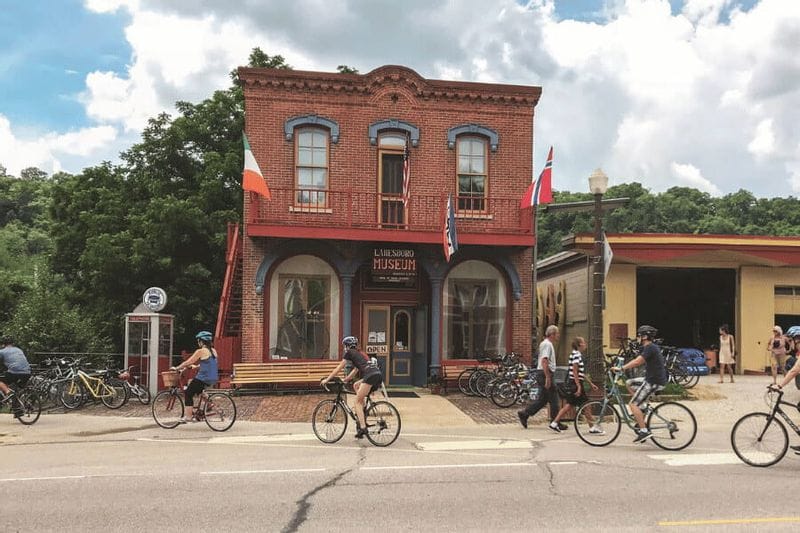
With the arrival of the railroad, Lanesboro became a hub of commerce and travel. Brick storefronts, churches, and Victorian homes built in the late 1800s and early 1900s still line its historic downtown, preserving the spirit of a thriving river town.
In the 1980s, a new chapter began when an abandoned rail line was transformed into the Root River State Trail. This bold project drew cyclists, hikers, and outdoor enthusiasts from across the Midwest and helped spark Lanesboro’s revival as the “Bed & Breakfast Capital of Minnesota.”
Today, visitors can experience this rich heritage through museums, historic walking tours, the Talking Trail audio experience, and preserved architecture that tells the story of a community shaped by resilience, creativity, and hospitality.

Lanesboro’s story begins in 1856, when settlers arrived, drawn by fertile farmland and the flowing Root River. Officially founded in 1869, the town quickly grew as a mill community. The Lanesboro Stone Dam, completed in 1868, powered sawmills and gristmills and still stands today as one of the Midwest’s oldest functioning stone structures. Fun fact: early settlers even rerouted the Root River to power their mills—a change that still shapes the landscape.

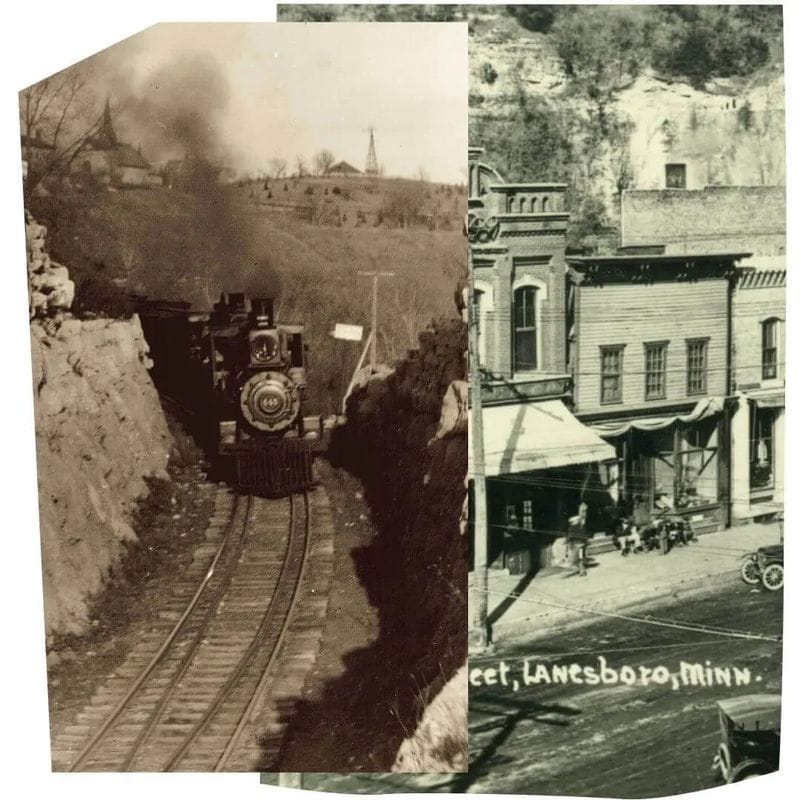
The arrival of the railroad transformed Lanesboro into a thriving hub of commerce and travel. Passenger trains and freight cars connected the town to larger cities, while Victorian homes, brick storefronts, and churches gave downtown its lasting character. Today, much of this historic architecture remains, offering a glimpse into the prosperity of the late 19th and early 20th centuries.
The Lanesboro Visitor Center, a replica of the original train depot, reflects the community’s dedication to welcoming visitors and preserving its history, funded entirely through local support.

As rail service declined mid-century, Lanesboro faced economic challenges—but a bold idea in the 1970s sparked a revival. Transforming the abandoned rail line into the Root River State Trail brought cyclists, hikers, and outdoor enthusiasts from across the Midwest, establishing Lanesboro as the “Bed & Breakfast Capital of Minnesota.” The town’s arts scene also flourished with the founding of the Lanesboro Art Council (1980) and Commonweal Theatre Company (1989).

Lanesboro’s history continues to shape its identity. Visitors can explore preserved downtown architecture, museums, walking tours, and the Talking Trail audio experience. From Amish heritage to local artisans, the town offers a living blend of history, culture, and small-town charm, making it a unique destination for all who visit.